
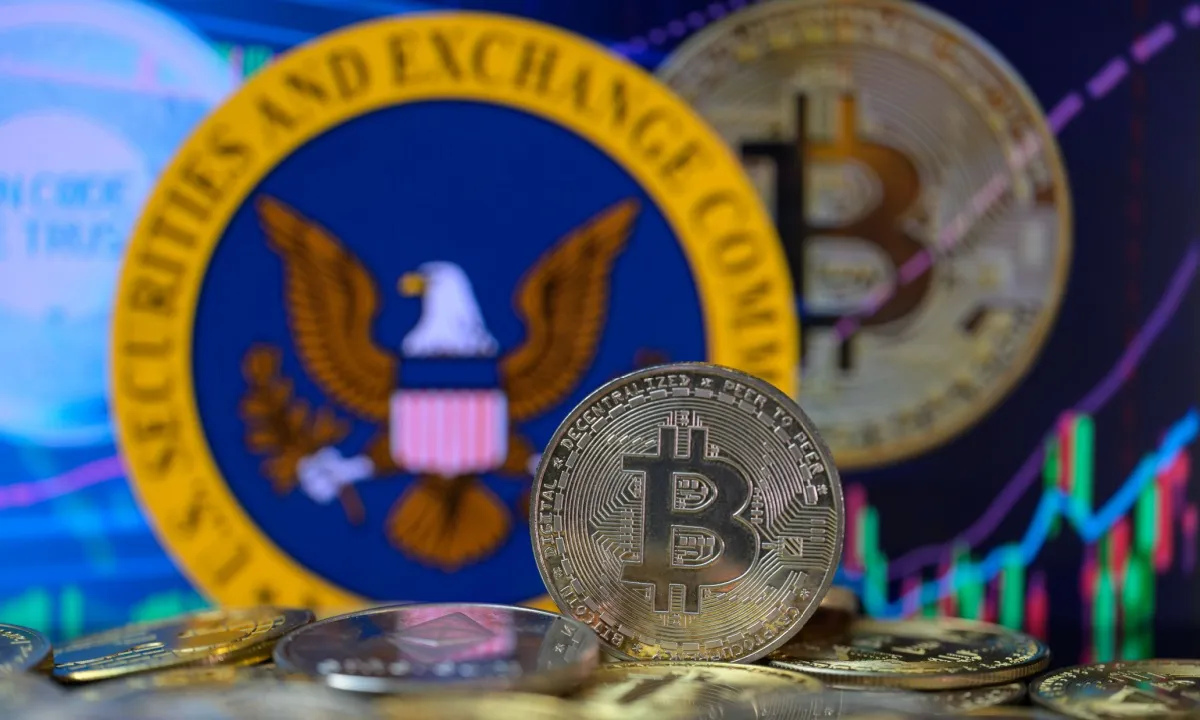
There are moments in crypto history when the regulatory spotlight turns blindingly bright—when the U.S. Securities and Exchange Commission (SEC) steps in with force, reshaping market sentiment, exchange behavior, and investor caution.
Right now, we’re in one of those moments again.
Over the past weeks, the SEC has launched a fresh wave of enforcement actions targeting exchanges, token issuers, staking programs, and even infrastructure providers. And while crypto veterans have seen regulatory storms before, this one feels different—more aggressive, more coordinated, and more consequential.
The question dominating the market is simple:
Why is the SEC intensifying the fight now, and what does it mean for the future of crypto?
Let’s break it down.
A Regulatory Push With New Momentum
The SEC’s stance toward crypto has always been strict, but recent moves show a clear escalation.
The agency has:
- Filed enforcement actions against major trading platforms
- Expanded its definition of what constitutes a “security”
- Targeted staking-as-a-service programs
- Sent subpoenas to multiple token projects
- Strengthened investigations into stablecoins
- Signaled that “economic reality” overrides token labels
This is not routine regulation.
This is a strategic, high-pressure campaign to assert dominance over the crypto industry.
In the SEC’s view, most token offerings, staking products, and centralized exchange operations fall under the category of securities activity—meaning they require registration and strict compliance procedures.
Crypto firms, meanwhile, argue the SEC is regulating by enforcement instead of providing clear rules.
This tension is at the heart of today’s escalating conflict.
Why the SEC Is Accelerating Enforcement Now
To understand the timing, you must understand the political and economic backdrop.
1. The U.S. Is Preparing for Clearer Digital Asset Legislation
As Congress inches toward potential crypto legislation, the SEC wants to cement its authority.
By acting aggressively now, it strengthens its claim as the primary regulator for digital assets.
2. Investor Protection Is the SEC’s Strongest Argument
With past blowups like FTX, Celsius, and Terra still fresh, the SEC believes stricter oversight is necessary to prevent future collapses.
3. The Growing Scale of Crypto Adoption
From ETFs to institutional custody solutions, crypto has become too big—and too interconnected—to ignore.
The SEC is pushing to ensure it controls the rules before mainstream adoption surges further.
4. The Global Race for Regulation
Countries like the UAE, Singapore, and the EU have already released clear frameworks.
The U.S. is behind—and the SEC is trying to catch up.
Which Crypto Sectors the SEC Is Targeting Most
A closer look at the enforcement actions reveals a clear pattern.
1. Centralized Exchanges
The SEC believes many major exchanges operate as unregistered:
- Securities brokers
- Clearing agencies
- Trading platforms
This gives the agency broad grounds to investigate listing practices, custody of customer assets, and operational models.
2. Token Projects With Fundraising Histories
Any project that issued tokens to raise capital is now under scrutiny.
The SEC argues these distributions meet multiple prongs of the Howey Test.
3. Staking Platforms
The SEC sees staking services as a form of yield product—similar to interest-bearing securities.
Several platforms have already been forced to shut down or modify staking offerings.
4. Stablecoin Issuers
Because stablecoins touch the banking and payments world, the SEC claims jurisdiction over their issuance, reserves, and collateral disclosures.
5. Infrastructure Providers
Even wallet providers, node operators, and analytics platforms are receiving inquiries.
The regulatory net is expanding in all directions.
How Markets Are Reacting to the New Pressure
Crypto markets tend to overreact to regulatory headlines—but this time, the reaction has been calculated rather than panicked.
1. Bitcoin Dominance Is Rising
When regulatory pressure increases, money moves toward the safest, most established assets—Bitcoin leads that charge.
2. Altcoin Volatility Is Spiking
Tokens with questionable legal structures are facing sharp price swings as uncertainty grows.
3. Exchanges Are Adjusting Their Strategies
Major platforms are:
- Removing problematic tokens
- Updating staking programs
- Enhancing compliance and transparency
The market is adapting—but cautiously.
4. Institutional Interest Is Still Strong
Interestingly, institutional flows into Bitcoin ETFs remain steady.
This shows institutions want regulated crypto exposure—even amid enforcement pressure.
The SEC’s Strategy: Regulation by Enforcement
The criticism at the center of the conflict is stark:
Crypto companies argue that the SEC refuses to issue clear guidelines and instead uses enforcement actions to define the rules.
The SEC’s counterargument?
The rules are already clear.
In their view:
- If it looks like a security
- And functions like a security
- And is marketed like a security
…then it’s a security—no matter the label attached to it.
This “functional definition” gives the SEC massive flexibility.
But it also creates uncertainty that makes it difficult for projects and exchanges to operate safely.
The Bigger Question: What Does This Mean for Crypto’s Future?
Despite the pressure, the SEC’s actions won’t kill crypto.
If anything, they may shape the next phase of the industry.
1. Projects Will Evolve Toward Compliance-Friendly Models
Tokenomics will shift.
Fundraising structures will change.
More projects will adopt decentralized, utility-based issuance models.
2. Exchanges Will Become More Regulated—But More Trusted
CEXs will begin to resemble brokerage firms or financial institutions.
This could improve consumer protection while limiting risky practices.
3. Institutions Will Gain More Influence
As the regulatory framework matures, institutional investors will feel safer entering the market.
The result:
More liquidity.
More stability.
More legitimacy.
4. DeFi May Become the Next Regulatory Battleground
As decentralized protocols grow, regulators will explore ways to enforce compliance without central intermediaries.
Expect DAO regulations, KYC-enforced pools, and decentralized identity systems to emerge.
Final Take: The Fight Is Far From Over
The SEC vs. crypto battle is entering a new phase—bigger, louder, and more consequential than ever.
The enforcement actions of today will shape:
- how new projects launch
- how exchanges operate
- how investors participate
- how global regulation develops
Crypto is not being crushed—it’s being reshaped.
Whether you’re a trader, builder, or long-term believer, the key is clear:
Stay informed, stay adaptive, and stay ahead of the regulatory curve.
